Periacetabular Osteotomy (PAO)
A Periacetabular Osteotomy (PAO) is a specialised surgical procedure used to treat hip dysplasia in adolescents and adults. Hip dysplasia occurs when the hip socket (acetabulum) does not appropriately cover the ball of the hip joint, leading to instability or impingment, pain, labral tears, and early arthritis.
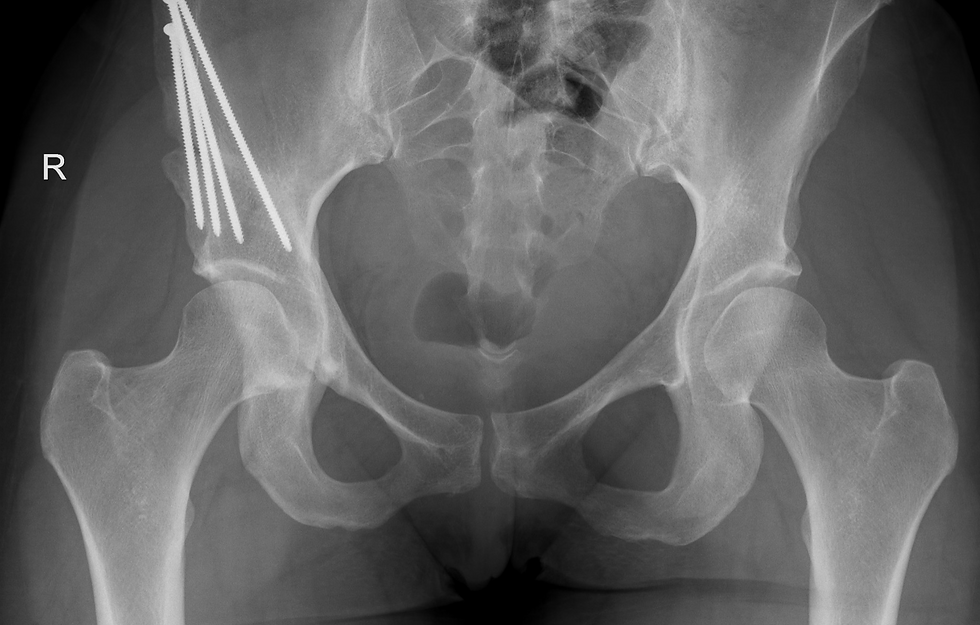
During a PAO, the hip socket is carefully mobilised from the pelvis using a series of precise bone cuts. The socket is then repositioned to provide better coverage of the femoral head and improve the biomechanics of the hip. Once the optimal position has been achieved, the bone is secured with screws, allowing it to heal in its new alignment.
The primary aim of PAO surgery is to:
-
Relieve hip pain
-
Improve hip stability and function
-
Protect the cartilage and labrum from further damage
-
Delay or prevent the progression of arthritis
-
Preserve the patient's natural hip joint and reduce the likelihood of requiring a hip replacement in the future



Typical indications
The typical reason for having a PAO is pain from hip dysplasia or a type of impingement called acetabular retroversion that hasn't responded to non operative management.
Some people are suited to having a PAO if they are older than 35-40years of age, have other medical or dietary concerns as this may affect the bones ability to heal quickly in an efficient manner.
Some people may already have poor quality cartilage or arthritis, and a PAO may not be the best option for them either.